Build Your Own LED Scoreboard? What It Really Takes
Build your own LED scoreboard from imported panels? We show honestly what a DIY scoreboard project involves, from structural engineering to LED processor.

LemonScore
Published on
At some point in every committee meeting, someone says: "We could just order the panels directly from China and build it ourselves." And it is true: the LED modules themselves are considerably cheaper on platforms such as Alibaba than in an integrator's complete package. But the modules are not the project. We show honestly what lies between ordering the panels and the first working scoreboard, so that your club can make an informed decision.

1. Purchasing: panels from overseas are only the start
With a direct import, the panel price is quickly joined by: sea freight or expensive air freight, customs duty and import tax, an exchange-rate risk, and delivery times of several weeks to months. Then come the technical questions: which pixel pitch suits the viewing distance? Is the brightness (outdoor needs 5,000+ nits) sufficient in direct sunlight? Is the protection rating (IP65 at the front) right for rain and dust? If you order the wrong thing, there is no way to return it, and replacement modules from a different batch show visible colour differences. So always order spare modules along with the rest.
2. Foundation and mounting: this is where it gets serious
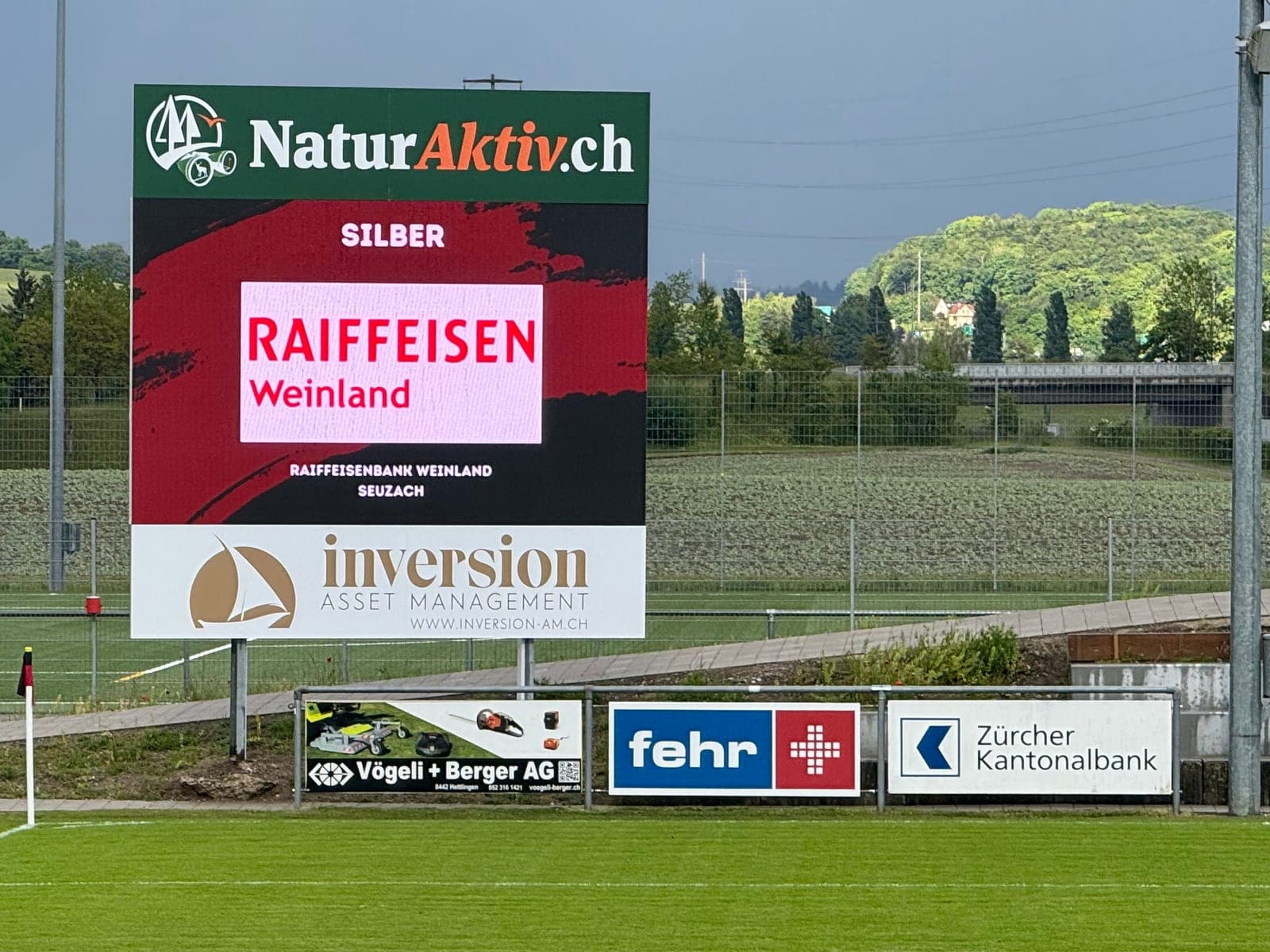
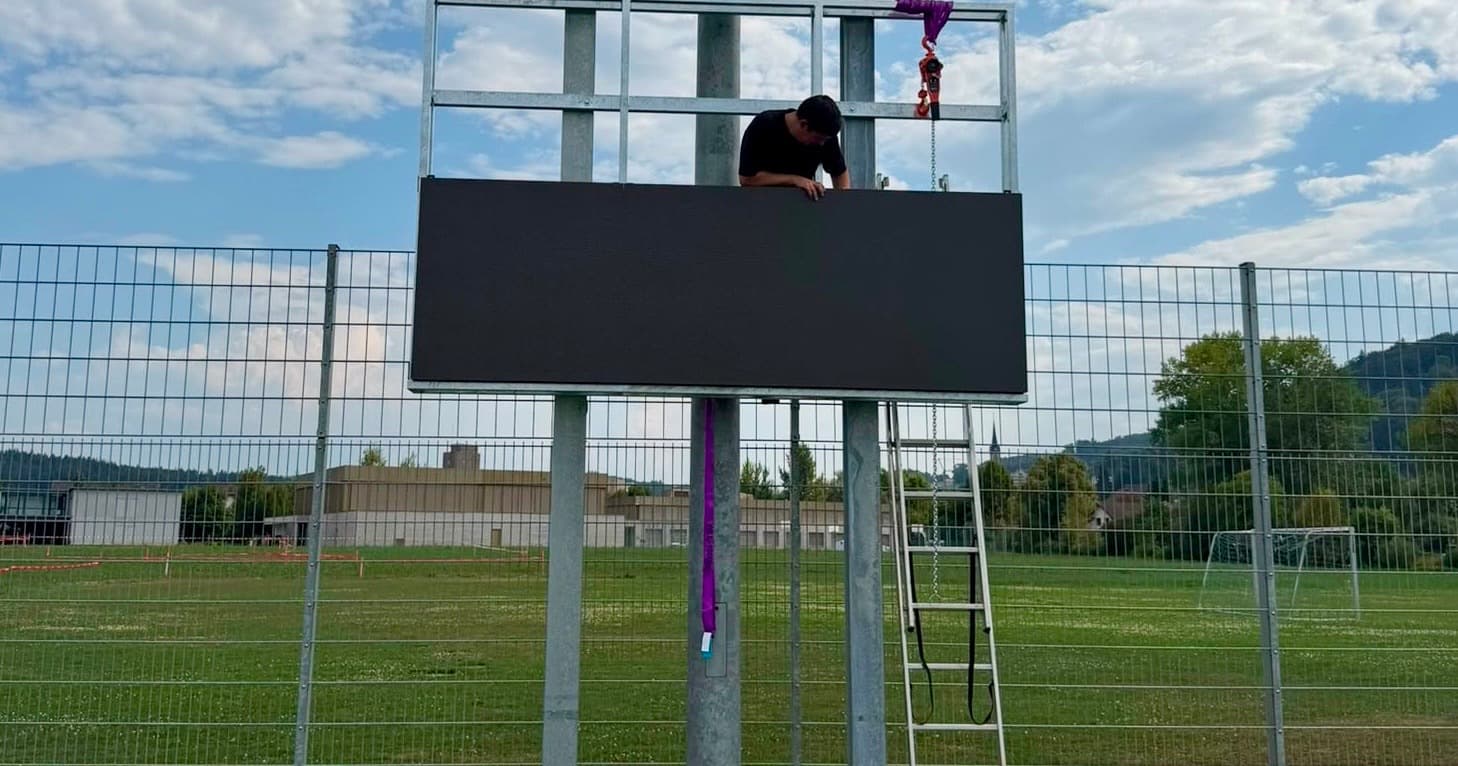
An outdoor LED wall measuring 4 by 2.5 metres weighs several hundred kilograms and acts like a sail in a storm. In concrete terms, that means:
- Structural engineering and foundation: the steel structure and concrete foundation must be designed for wind loads, usually with calculations by a qualified engineer
- Building permit: a permanently installed scoreboard requires a permit in many places; clarify this with your local authority (in Switzerland, the municipality) before ordering
- Electrics: the connection belongs in the hands of an electrician (power requirements, fusing, lightning protection, residual current device)
Professional mounting is not a nice-to-have: it is a liability issue. If an improperly mounted scoreboard tips over, the club is liable.
3. Signal path: bridging the distance cleanly
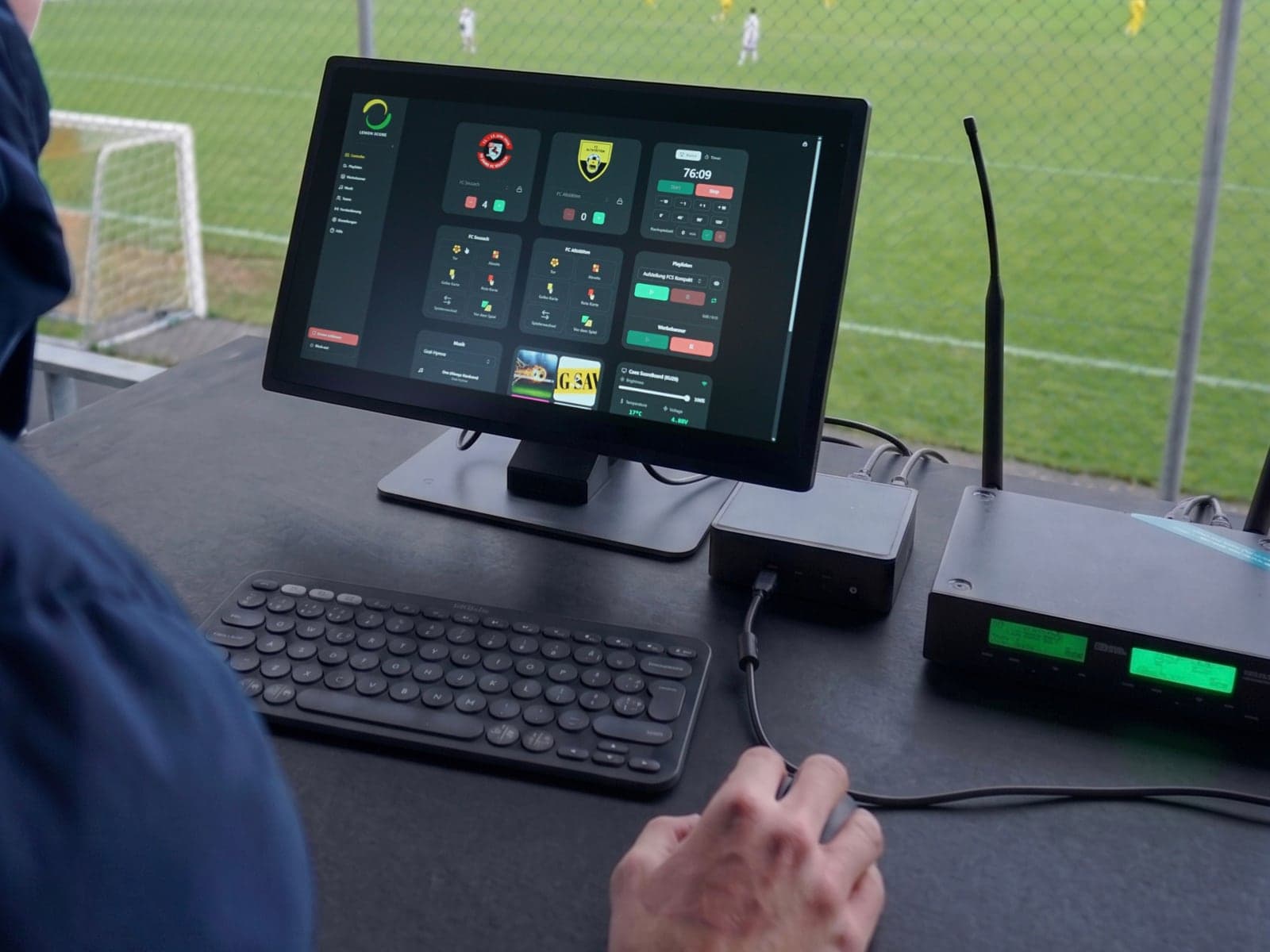
The setup is always built the same way: the computer or laptop (or a LemonScore Controller) is connected to the LED processor via HDMI. From the processor to the scoreboard, the signal runs over Ethernet cable (up to 100 metres) or, for longer distances, over fibre optic, professionally laid in a cable conduit in the ground, with a spare conduit for later. Anyone who improvises here will spend years chasing loose connections and picture dropouts.
4. Setting up the LED processor: the underestimated chapter
LED modules do not simply display an HDMI picture. In between sits an LED processor (sending unit) plus receiving cards in the cabinets, all of which need to be configured: module mapping, brightness curves, colour calibration, refresh settings. Which systems have proven themselves, and why we recommend the Novastar platform, is explained in our article Which LED processor for a digital scoreboard? Without prior experience, allow several evenings for the initial configuration, with instructions in English or Chinese.
5. Software: the easiest part
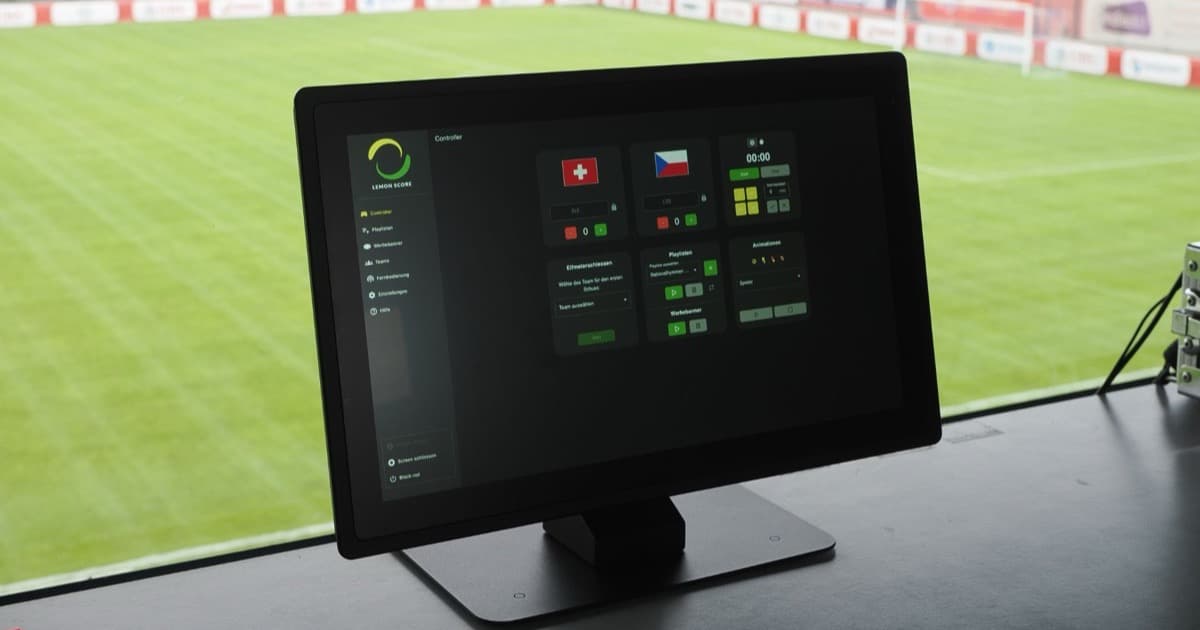
The good news: once the wall shows a picture, the rest is solved. LemonScore runs on any Windows or Mac device, feeds the wall with the score, match clock and sponsor advertising, and can be controlled remotely from a phone. The software is the same for a DIY build as for an integrator project.
Honest conclusion: when is a DIY build worthwhile?
A DIY build is worthwhile if the club has genuine specialists in its own ranks: an electrician, a metalworker, someone with AV or LED experience, and if these people will support the project for years (including repairs). In that case, noticeable savings compared with the complete package are possible.
If this expertise is missing, the supposedly cheap import often ends up more expensive: wrong purchases, mounting costs, troubleshooting and missing warranty claims add up. An integrator delivers structural engineering, mounting, cabling, controller setup and warranty from a single source. What that costs is shown in our cost guide, and how clubs finance the purchase is covered in the article on the Swisslos Sportfonds (the cantonal sports funds financed by the Swiss lottery).
A proven middle way: panels and structure from a specialist company, with the club contributing its own labour for excavation, foundation preparation and cable pulling. This keeps the budget under control without the responsibility for structural engineering and electrics ending up with the committee.