Pixel Pitch Explained: 3.9, 6.67 or 8 mm for a Scoreboard
Pixel pitch explained: 3.9, 6.67 or 8 mm for your LED scoreboard? What the values mean and which pitch suits halls, football pitches and viewing distances.

LemonScore
Published on
Anyone looking into LED scoreboards for the first time quickly stumbles over values such as "3.9 mm", "6.67 mm" or "8 mm". Behind them is the pixel pitch: one of the most important technical parameters of an LED scoreboard. It determines image quality, the optimal viewing distance and, in the end, the price. In this post we explain what pixel pitch is and which value really suits which setup.
What is pixel pitch?
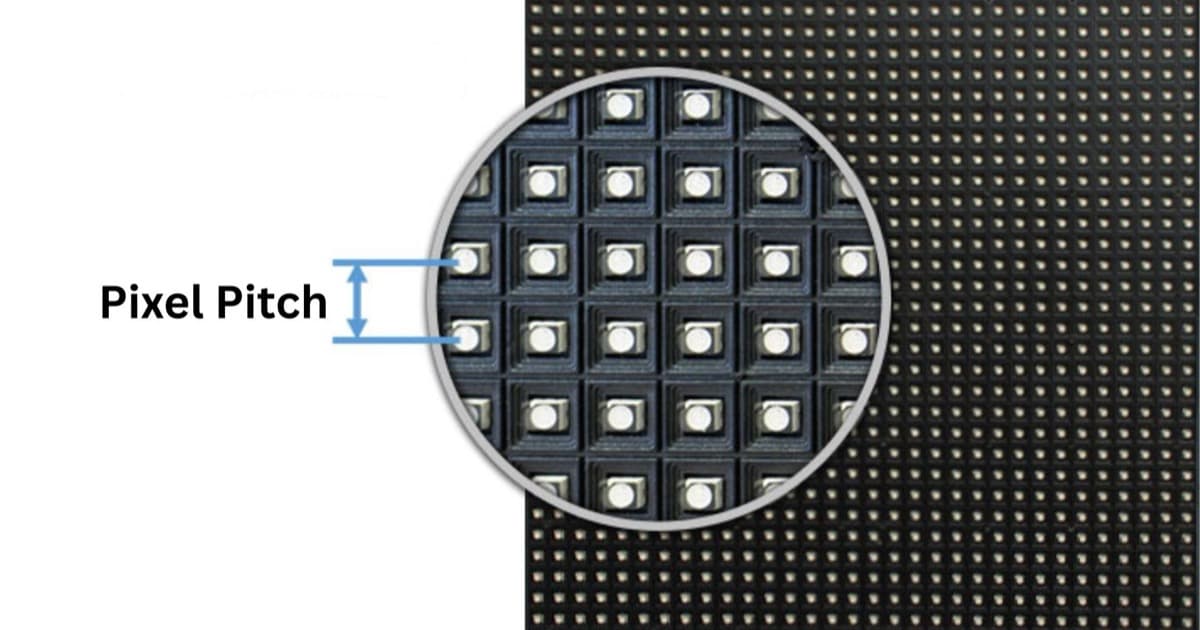
Pixel pitch describes the distance between two neighbouring pixels on an LED screen, measured in millimetres, from pixel centre to pixel centre. Manufacturers often state the value with a leading "P", for example P3.9, P6.67 or P8.
- 3.9 mm pitch: high pixel density, sharp image from a short distance
- 6.67 mm pitch: balanced ratio of resolution and surface area
- 8 mm pitch: large surfaces for long viewing distances
The smaller the pixel pitch, the higher the pixel density and therefore the resolution per square metre. A smaller pitch means sharper images, higher costs and a shorter minimum viewing distance.
Pixel pitch and readability distance: the most important rule of thumb
A proven rule of thumb in the LED industry is:
Minimum viewing distance (in metres) ≈ pixel pitch (in millimetres)
In other words: with a 6.67 mm display, nobody should stand closer than about 7 m to the screen, otherwise individual pixels become visible. The optimal distance for a comfortable, razor-sharp image is roughly two to three times the pixel pitch value.
| Pixel pitch | Min. distance | Optimal distance | Max. useful distance |
|---|---|---|---|
| 3.9 mm | approx. 4 m | 8 to 12 m | up to approx. 16 m |
| 6.67 mm | approx. 7 m | 13 to 20 m | up to approx. 27 m |
| 8 mm | approx. 8 m | 16 to 24 m | up to approx. 35 m |
| 10 mm | approx. 10 m | 20 to 30 m | up to approx. 50 m |
These values are guidelines. Brightness, ambient light and image content also play a role. The pixel pitch only tells you how close someone may stand to the scoreboard; how large it must be for the score and sponsor logos to be readable from the stand depends on the distance to your spectators, which we cover in our LED scoreboard cost article alongside the size table.
3.9 mm: premium indoor and close range
When is it suitable? Sports halls with stands close to the court, reception areas, entrance screens, training rooms, high-end indoor event spaces.
Strengths:
- Very sharp image, even from a few metres away
- Ideal for detailed content (statistics, adverts in HD quality)
- Suitable for streaming thanks to the high pixel density
Drawbacks:
- Highest price per square metre
- Often technically oversized in large halls
Example situation: a basketball or floorball court with spectators right at the edge of the playing area. Fans sit 4 to 10 m from the display, and 3.9 mm ensures they see no visible pixels.
6.67 mm: the outdoor all-rounder
When is it suitable? Football pitches, outdoor ice hockey rinks, athletics facilities, multi-purpose grounds and any application with a clear minimum distance of around 7 m.
Strengths:
- Very good ratio of image quality to cost
- High brightness available, so suitable for outdoor use
- The de facto standard for SMD outdoor scoreboards
- Works equally well for scores, statistics and sponsorship content
Drawbacks:
- At very short distances (under 7 m) the pixel structure becomes visible
- Unnecessarily fine for very large stadium displays with long sight lines
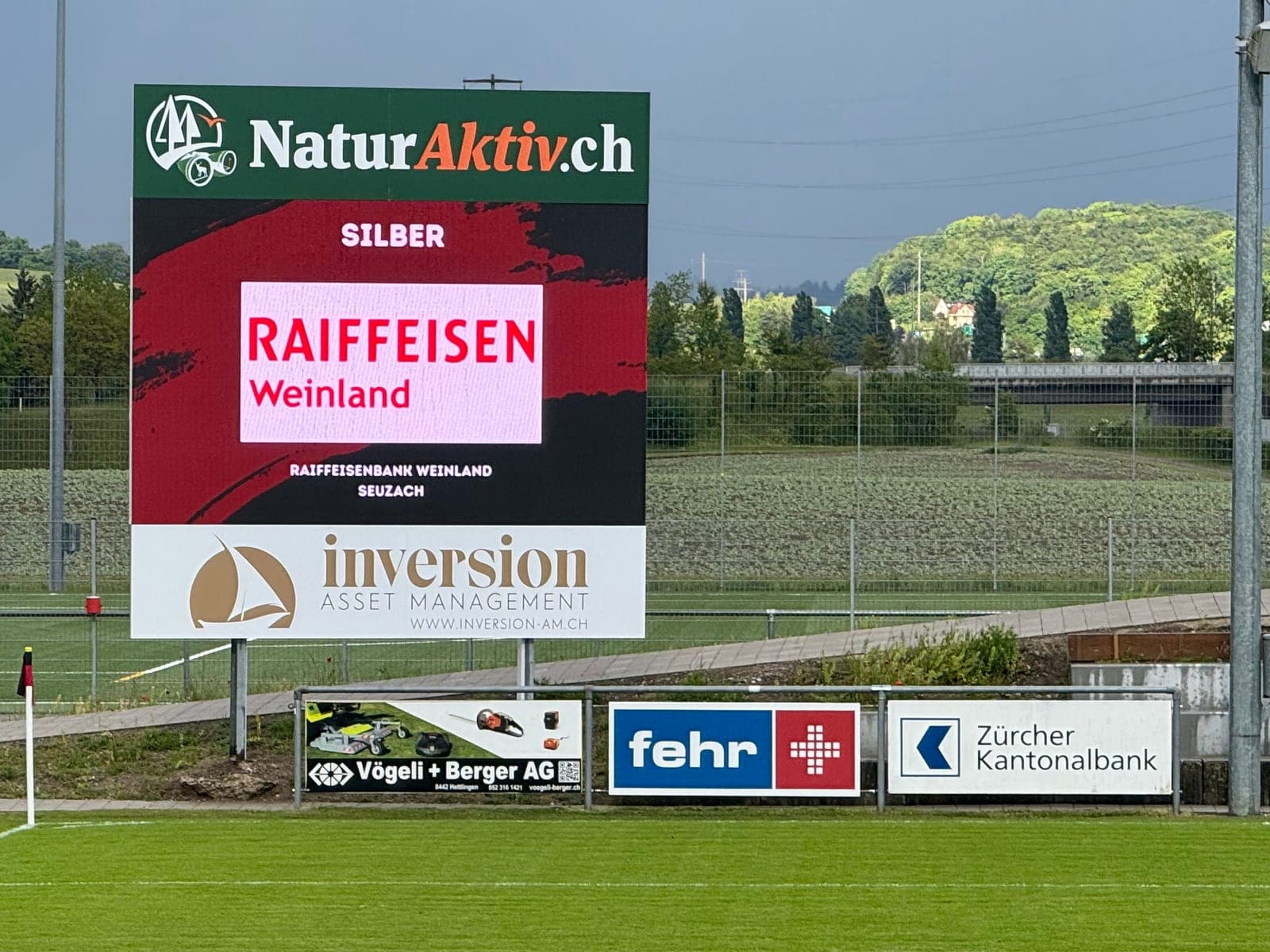
Example situation: an amateur or semi-professional football club with a scoreboard behind the goal or on the opposite side of the pitch. Spectators in the stand are 15 to 30 m from the display: 6.67 mm delivers a clean image here at a fair price.
8 mm: for large surfaces and long distances
When is it suitable? Large outdoor stadiums, advertising surfaces along main roads, main scoreboards with a long distance to the audience, applications where surface area matters more than every detail.
Strengths:
- Considerably cheaper per square metre than finer pitches
- Allows large surfaces on a manageable budget
- Very high brightness available, even in direct sunlight
- Robust and well established for continuous outdoor operation
Drawbacks:
- Visible pixel structure from less than 8 m, not suitable for nearby seating
- Detailed graphics (for example small player statistics) need correspondingly large font sizes
- Less suitable for TV or streaming close-ups than 6.67 mm
Example situation: a club with the main scoreboard behind the goal in a larger stadium, where the nearest spectators sit at least 10 to 15 m away. Here 8 mm is perfectly sufficient and saves a noticeable amount of budget.
Indoor or outdoor? More than just the pixel pitch
Pixel pitch is only one factor. Equally important are:
- Brightness (nits): indoors, 800 to 1,500 nits are enough; outdoors it should be 5,000 to 7,500 nits so that the image remains readable in sunlight.
- IP rating: outdoor modules should reach at least IP65 (front side).
- Refresh rate: at least 1,920 Hz, better 3,840 Hz, important as soon as matches are filmed or streamed (otherwise the video flickers).
- Module size and serviceability: front service saves a lot of effort on wall-mounted outdoor boards.
How to choose the right pixel pitch
- Measure the minimum viewing distance: how close is the nearest spectator?
- Check the average distance: where does the bulk of the audience sit?
- Define the content: only the score and sponsor logos, or also complex statistics and videos?
- Compare the budget: a 3.9 mm board can cost twice as much as an 8 mm board of the same size.
- Think about streaming: if you film matches, consider pixel pitch and refresh rate together.
Conclusion: the right pixel pitch depends on the location
There is no "best" pixel pitch, only the right one for your situation. For most Swiss amateur and semi-professional clubs, 3.9 mm for indoor and 6.67 mm for outdoor are the best compromise between image quality and cost. 8 mm remains the solid choice when large surfaces with a long viewing distance need to be realised at a fair price.
Not sure which value is right for your hall or sports ground? Talk to us, we help you select the right hardware and make sure that LemonScore puts every pixel to good use.
You can read more about investment planning in our post How much does a football scoreboard cost in 2026?.