Perimeter Advertising vs. LED Scoreboard: Cost and Effort
Perimeter advertising or LED scoreboard? Comparison for football clubs: reach, costs in CHF (pitch-side board 300 to 650 per season), effort and sponsor prices.

LemonScore
Published on
The board at the side of the pitch has been the basic product on every club's rate card for decades. Now that LED scoreboards are affordable for amateur clubs too, a new question comes up in committee meetings: does the scoreboard replace perimeter advertising, complement it, or not pay off at all? This article compares the two advertising spaces by reach, cost and effort, with the prices Swiss amateur clubs actually charge, and with a clear recommendation on how the two work together.
The comparison at a glance
| Criterion | Perimeter advertising (tarpaulin or aluminium board, 3 x 0.75 m) | LED scoreboard (sponsor slot) |
|---|---|---|
| Visibility | permanent but static; "invisible" after a few seasons through habituation | in the line of sight at every goal, every card, every glance at the clock; moving and bright |
| Slots | limited by the length of the pitch | rotating: 6 to 12 sponsors on the same surface, exclusive positions (goal animation, match clock) |
| Price per season (Swiss amateur football) | CHF 300 to 650 | CHF 600 to 1,200 (rotating banner), CHF 2,000 to 3,000 (main sponsor with match clock) |
| Production | CHF 400 to 600 for printing and mounting, usually paid by the sponsor | none, logo as a file |
| Changing the content | reprint | in minutes, even during the match |
| Club's investment | board frames, often already in place | LED wall 3 x 2 m: CHF 12,000 to 15,000 all-in |
| Effort per match day | none | prepare the playlist once, then automatic |
| Weather and lifespan | weathers, tarpaulins replaced after 3 to 5 years | outdoor modules, 50,000+ operating hours |
| Proof for the sponsor | photo | screenshot plus number of appearances from the playlist |
Reach: who looks where, and when?
A perimeter board is seen as long as someone looks in its direction. With 250 spectators and 13 home matches of the first team, that is a good 3,000 views per season; with youth and second-team matches on the same pitch, 8,000 to 12,000. That is the value a board sponsor buys, and it is real. The problem is habituation: after two or three seasons nobody notices which logo hangs in position 14.
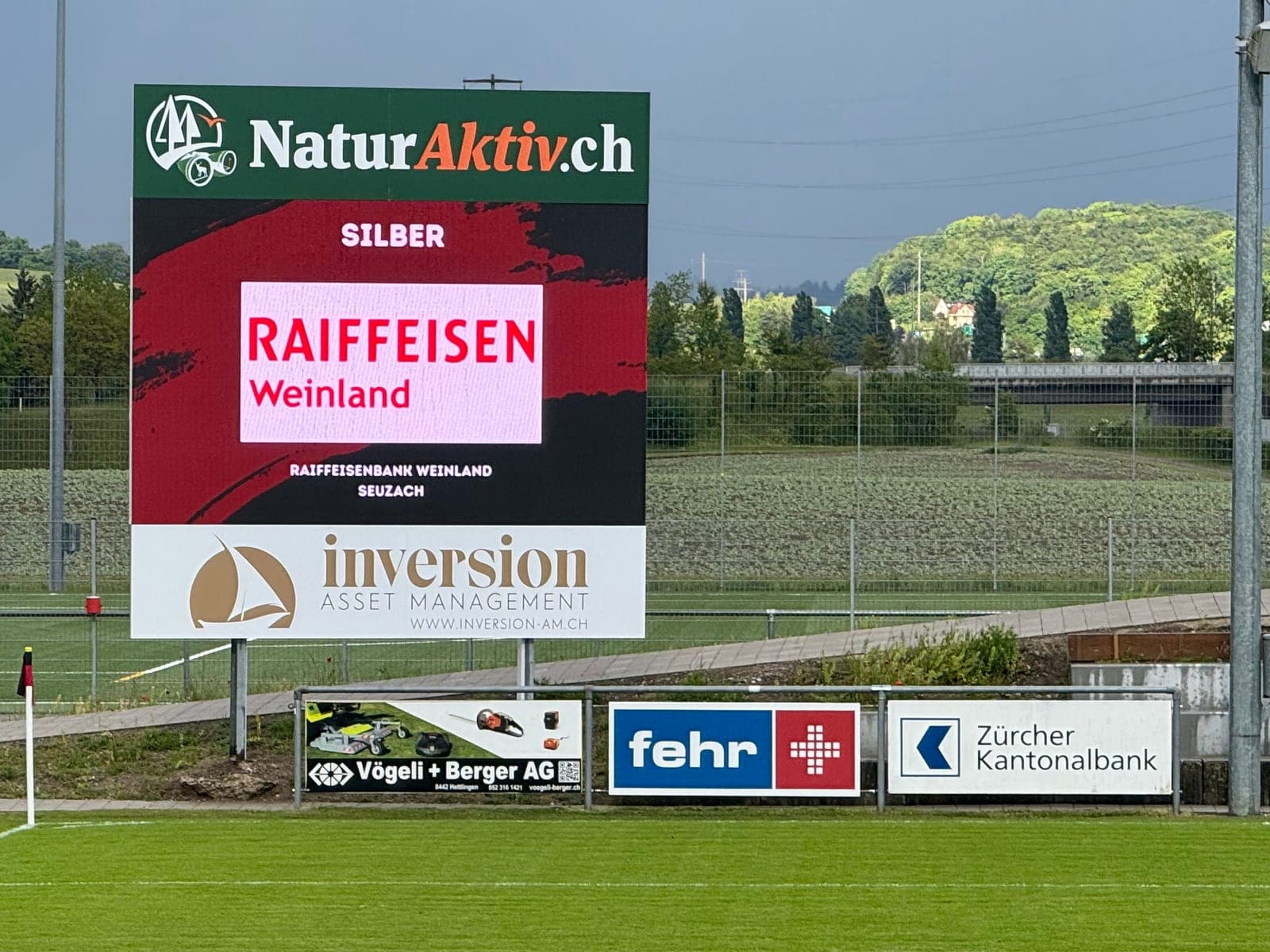
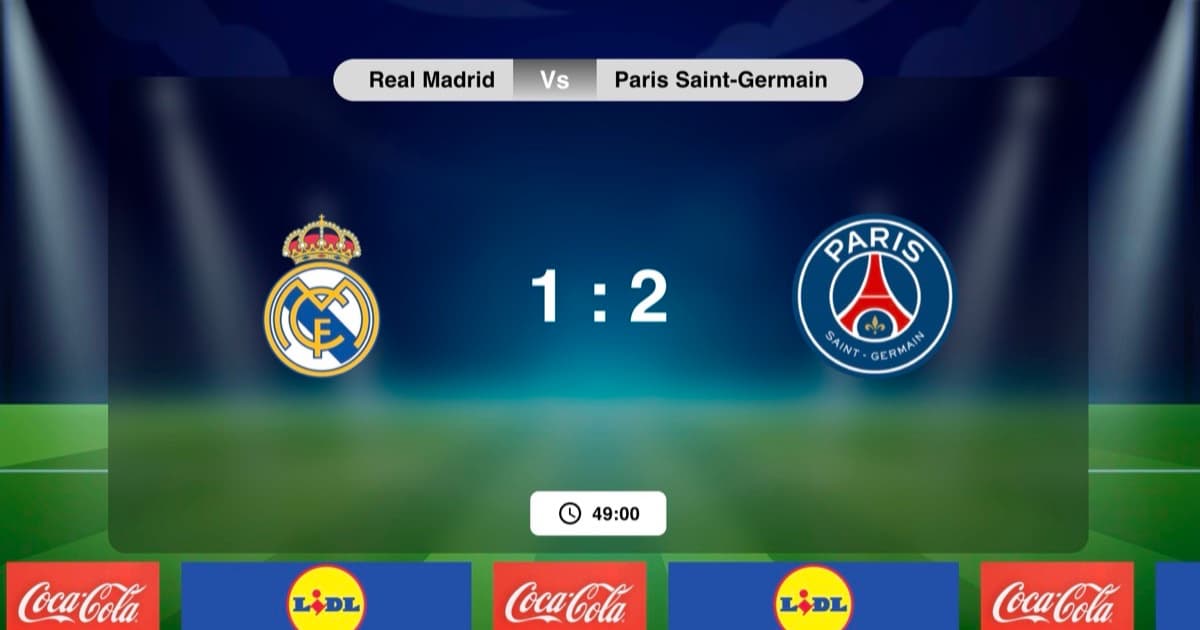
The scoreboard has less surface, but attention is distributed differently: at every goal, every card and in the final minutes everyone looks at the score and the match clock, and that is exactly where the sponsor logo runs. Moving content (goal animation with logo, rotating banners below the score, half-time spot) gets noticed because it changes. For the sponsor this means fewer seconds, but seconds with eye contact.
The honest comparison: the board delivers constant presence, the scoreboard delivers moments. The best rate card sells both, as the basic product and as the upgrade.
Cost: what Swiss clubs charge
There is no official tariff for perimeter advertising in Switzerland. The usual range in amateur football: CHF 300 to 650 per season for a standard board of about 3 x 0.75 m, most commonly CHF 400 to 450. Double boards sit at 1.5 to 2 times that. Production is almost never included: for a 3 m board, CHF 400 to 600 for printing and mounting is realistic, usually paid by the sponsor.
For the sponsor slot on the scoreboard the rule of thumb is 1.5 to 2 times a standard board, i.e. CHF 600 to 1,200 per season for a rotating banner in the third and fourth divisions, CHF 2,000 to 3,000 for the main sponsor with its logo in the match clock. Exclusive positions such as the goal animation sit in between. The sponsor pays more per season but saves the production, so net the slot often costs the same in the first year as a new board.
On the club's side of the ledger is the investment: a 3 x 2 m LED wall costs CHF 12,000 to 15,000 all-in (panels, substructure, power, mounting, controller); the details are in our article How much does an LED scoreboard cost in 2026?. With 8 to 12 sponsors at CHF 600 to 1,200, the wall is refinanced in two to three seasons. A grant from the Swisslos Sportfonds (the Swiss lottery's cantonal sports funds, around 40 % on sports equipment in many cantons) shortens the payback further; how the application works is explained in Scoreboard funding via the Swisslos Sportfonds.
Effort: print once or set up once
The board is convenient: once produced, it hangs for three to five years until the tarpaulin fades. The effort lies in changing sponsors (reprint, mounting) and in keeping track of who hangs where.
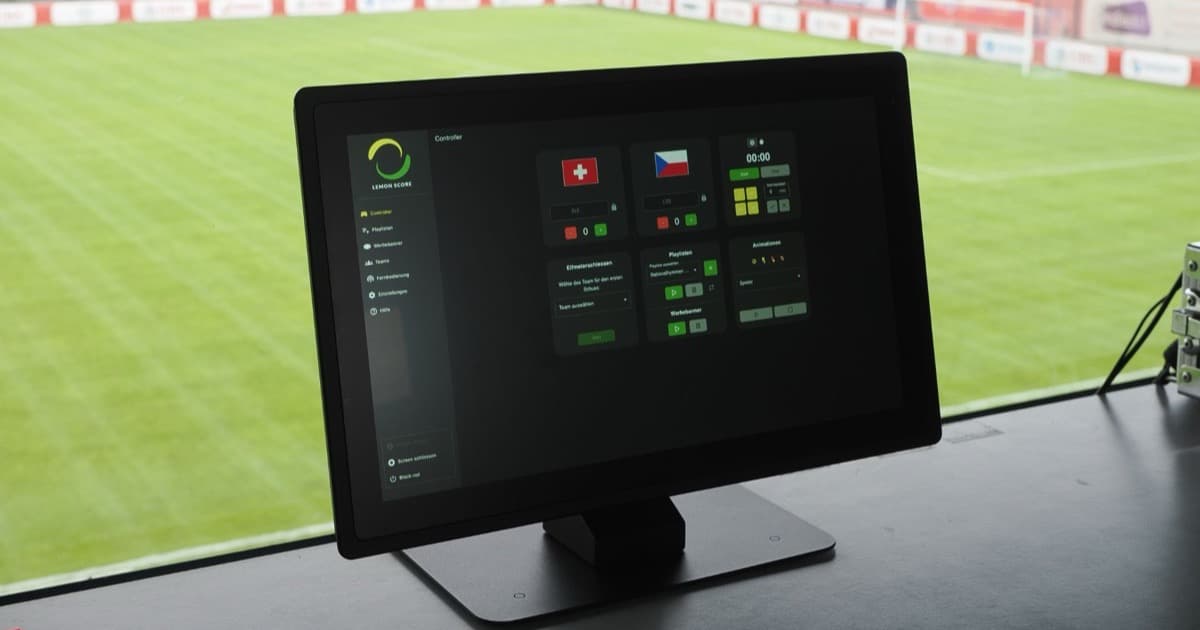
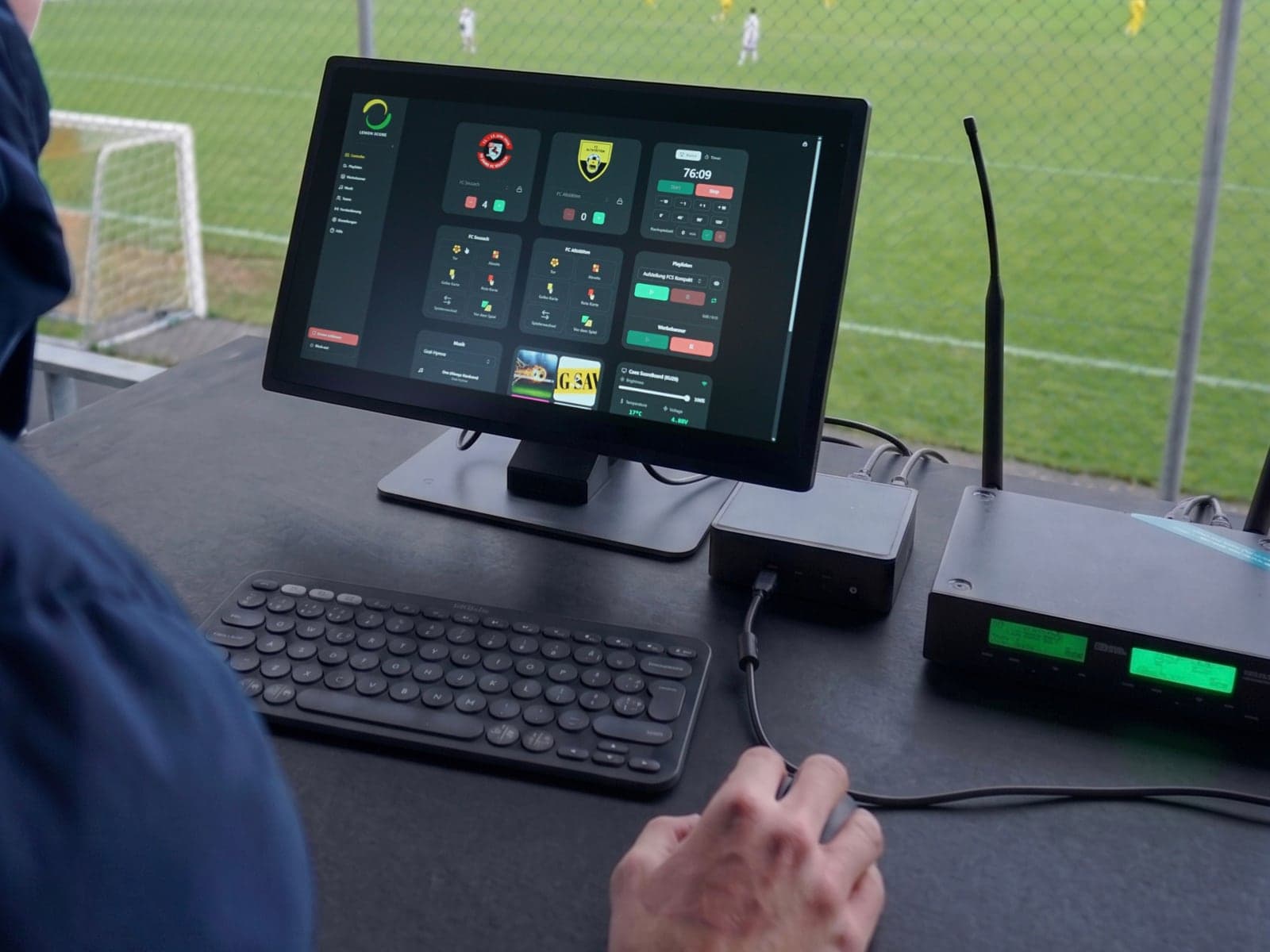
The scoreboard needs setting up once: collect logos, create the playlist, define order and display duration, assign the goal animation. After that the rotation runs automatically at every match, even if only one person sits at the operator's desk on match day. A new sponsor is in within five minutes, an expired one is out within a minute, without anyone climbing a ladder. Our page on advertising on the scoreboard shows step by step how sponsor logos, advertising banners and playlists are set up.
One point that counts in sponsor conversations: proof of delivery. For the board there is a photo. For the scoreboard there is the screenshot with the logo and the number of appearances per season from the playlist. That is the argument the sponsor uses to justify the expense to its own accounts department.
Recommendation: board as the base, scoreboard as the upgrade
The scoreboard does not replace perimeter advertising, it raises the value per sponsor. In practice this structure works:
- The board remains the entry product at CHF 300 to 650, with production shown separately.
- The LED slot as an add-on for existing board sponsors: someone who already pays CHF 400 for a board is more likely to say yes to a CHF 300 to 400 surcharge for the rotation than a new customer to CHF 900.
- Exclusive positions (main sponsor with match clock, goal animation, half-time video) to one sponsor each, at a premium.
- One proof of delivery per season to everyone, unprompted.
That way you sell more slots on the same touchline without a single additional board frame. Our post on finding sponsors for a football club shows how to build the tiers and approach businesses.
Frequently asked questions
What does perimeter advertising cost in Swiss amateur football?
CHF 300 to 650 per season for a standard board of about 3 x 0.75 m, plus a one-off CHF 400 to 600 for printing and mounting. In higher divisions and at premium positions (stand side), higher prices are common.
What should a sponsor slot on the LED scoreboard cost?
1.5 to 2 times a standard board: CHF 600 to 1,200 per season for a rotating banner, CHF 2,000 to 3,000 for the main sponsor with its logo in the match clock.
Does the scoreboard replace the boards?
No. The board delivers constant presence, the scoreboard delivers attention at the decisive moments. Clubs do best with the board as the basic product and the LED slot as the upgrade.
How many sponsors fit on a scoreboard?
A 3 x 2 m wall easily takes 8 to 12 sponsors: one main sponsor in the layout, one goal animation, six rotating banners and three or four half-time spots. More than six banners in the rotation dilute the display time per sponsor.
Do you need prior knowledge for LED advertising?
No. With LemonScore, logos, banners and clips are uploaded, placed in a playlist and played automatically or at the click of a button during the match; one person at the operator's desk is enough.
Conclusion
Perimeter advertising and the LED scoreboard are not competitors but two tiers of the same rate card. The board brings CHF 300 to 650 per season and constant presence, the sponsor slot on the scoreboard 1.5 to 2 times that and attention at every goal, with no production costs and clean proof of delivery. Clubs that offer both sell more slots on the same touchline. With LemonScore, the score display becomes the advertising space that is easiest to sell.